Warehousing forms the backbone of an efficient logistics system. It ensures an uninterrupted flow of goods, supports production processes, and keeps supply chains running smoothly. In addition, it fulfills numerous strategic tasks that can decisively influence a company’s success.
1. Safeguarding Function
The safeguarding function ensures that companies remain capable of acting even in unexpected situations—such as delivery delays, production bottlenecks, or sudden spikes in demand. To guarantee all this, a strategic inventory is built up that is accessible at any time. This safeguarding function guarantees security of supply and enables smooth production as well as on-time delivery.
Industry-Specific Requirements
In practice, the implementation of the safeguarding function differs by industry. In the building materials trade, for example, construction materials are kept in sufficient quantities to fulfill spontaneous orders from construction sites. Metal processors store steel and aluminum sheets to respond flexibly to new production requirements at any time. In the timber trade, the focus is on dry and protected storage of construction and furniture wood to ensure quality and availability even during seasonal demand peaks.
Racking Systems for the Safeguarding Function
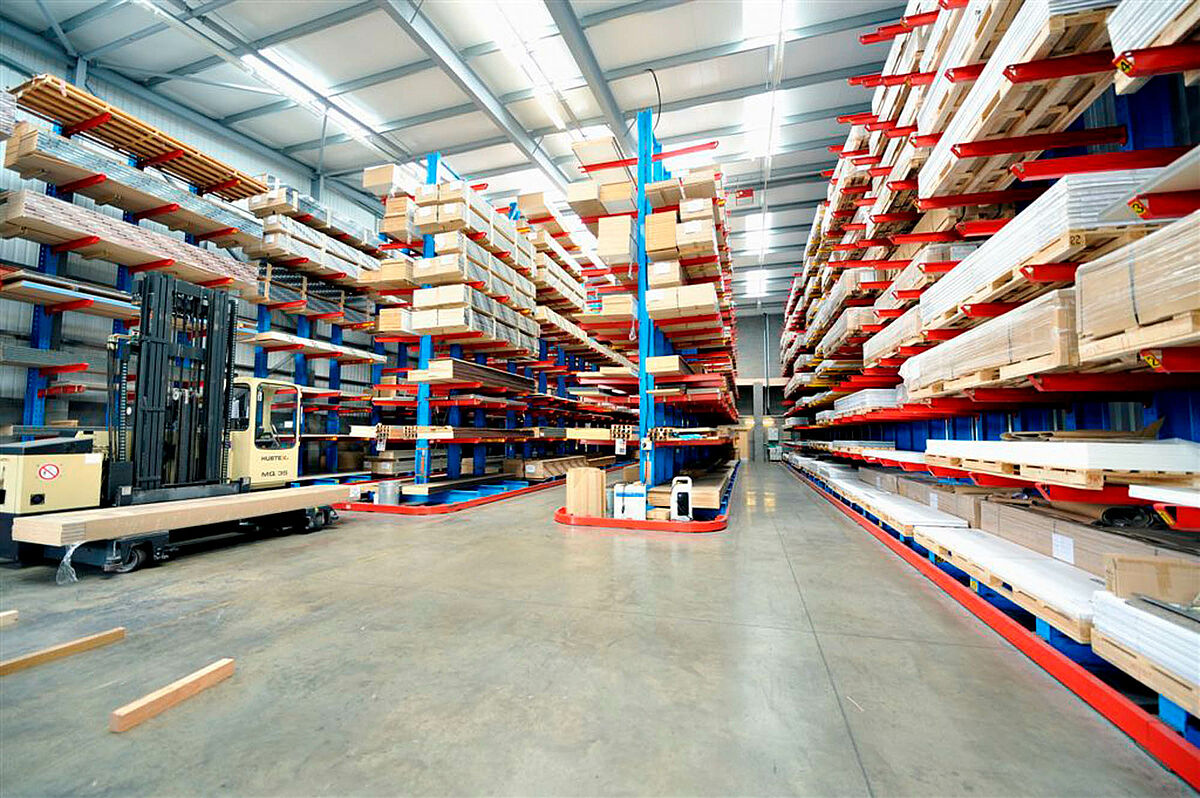
The safeguarding function only works if all goods are stored in a structured and accessible manner. Cantilever racks are particularly suitable for bulky long goods such as wood or metal bars that must be easily accessible when needed. Pallet racks offer an efficient solution for standardized products, while mobile racking maximizes space usage and is particularly compelling in warehouses with limited floor space. These systems enable tidy storage and quick access to required goods.
Optimized Processes
The safeguarding function relies on optimized processes and modern inventory management systems that continuously monitor stock levels. They ensure that reorders are triggered in time to secure the availability of critical materials. In addition, safety stocks can be set up that can be called upon immediately in the event of high demand or delivery delays. Buffer zones within the warehouse also provide space to temporarily stage goods and offset potential delays.
Advantages of the Safeguarding Function:
- Prevention of production downtimes, especially in just-in-time production
- Increased customer satisfaction through consistent delivery capability
- Protection against external influences such as strikes or transport difficulties
2. Provisioning Function
The provisioning function ensures that materials and goods are available precisely when they are needed for production or further processing. It balances timing differences between procurement, processing, and delivery, and guarantees a smooth flow of goods throughout the process.
Industry-Specific Requirements
Requirements for the provisioning function vary by industry. In mechanical engineering, components such as screws, sheets, or profiles must be available in the correct sequence and at the right time to avoid interrupting production. Specialist retailers need fast and efficient provisioning to stock shelves for retail on schedule. In wood processing, it is crucial that the required material is delivered to the processing machines in optimal condition.
Racking Systems for the Provisioning Function
A precise material flow requires suitable racking systems. Shelving racks are ideal for smaller components that are staged directly for assembly. Pallet racks are suitable for larger quantities that can be withdrawn systematically. Mobile racking saves space while enabling rapid access to desired goods. For industries with high material throughput, such as the automotive sector, automated storage systems can also be advantageous, as they ensure error-free and just-in-time provisioning.
Optimized Processes
The provisioning function is supported by well-designed processes and smart technologies. Warehouse management systems plan and control material staging and ensure that goods are automatically delivered to the appropriate workstations. This is particularly important in just-in-time production, where every component must be available at precisely the right time. Clear rack labeling also helps accelerate provisioning and prevent errors.
Advantages of the Provisioning Function:
- Optimization of production processes through continuous material availability
- Reduction of waiting times and production interruptions
- More efficient use of warehouse and production space
3. Refinement (Value-Adding) Function
A warehouse is not always just a place of storage—it can actively contribute to value creation. Whether wine maturing under optimal conditions, cheese developing its perfect consistency, or wood improving in quality through drying—the refinement function makes all this possible. Targeted storage conditions and specific processing steps transform products and prepare them ideally for their next use. In this way, the warehouse becomes a workshop of value creation.
Industry-Specific Requirements
Not every product is refined equally by storage. In wood processing, for example, raw wood is stabilized through drying to prevent warping or cracking—making it ideal for furniture manufacturing or construction. The food industry uses the refinement function for the maturation of wine, cheese, or whisky. Under precise conditions such as controlled temperature and humidity, these products develop their full aroma and optimal quality.
The metalworking sector also relies on refinement. Raw metals and components are often given protective coatings to prevent corrosion or are securely packaged to avoid transport damage. In the building materials trade, proper storage of concrete or gypsum ensures that these materials retain their processing quality even during longer storage periods.
Each industry has specific requirements that must be met by tailored storage processes and conditions. This makes the warehouse an active part of the value chain.
Racking Systems for the Refinement Function
The refinement function requires specialized racking systems tailored to the products’ needs. Cantilever racks are ideal for drying and storing wood because they promote air circulation around the stored materials, preventing warping or cracking. For the maturation of foods such as cheese or wine, temperature-controlled pallet racks provide the necessary precision in temperature and humidity.
In metalworking, mobile racking or automated storage systems enable safe and efficient access to refined products. These systems protect materials from external influences while optimizing the flow of goods. Choosing the right racking system supports both product quality and the efficiency of the overall refinement process.
Technologies and Processes
Modern technologies support the refinement function by controlling and monitoring it. Sensors in temperature- and humidity-controlled areas ensure that conditions remain optimal at all times. Automated systems transport goods efficiently between refinement stations, saving time and reducing errors.
Advantages of the Refinement Function:
- Improved product quality through controlled storage
- Added value for end customers through optimized goods
- Increased efficiency through integrated processes
4. Conversion Function
In warehousing, goods can be prepared to meet demand. Typical tasks include decanting bulk quantities into smaller units or assembling kits for production.
Industry-Specific Requirements
In many industries, the conversion function is an indispensable part of warehouse logistics. In the food trade, large units—such as grains or spices—are often repackaged into smaller, retail-ready packs, preparing goods for sale to end customers.
In metalworking, raw materials are often cut into specific shapes so they can be used directly in production. Screws, profiles, or sheets are provided in exact quantities to optimize the production process. The automotive industry also uses this function: assemblies are pre-assembled to reduce final assembly times.
For specialist retailers or general retail, the conversion function is likewise central. Products are often packaged into sets or bundles that offer added value for customers—such as tool kits or kitchen starter packs.
Racking Systems for the Conversion Function
The conversion function places specific demands on racking systems, often involving high material throughput and precise processes. Shelving racks are ideal for temporarily storing small components or materials needed for repacking or pre-assembly. They allow clear organization and quick access to required items.
For larger or heavier goods, pallet racks provide the necessary stability and flexibility. In industries such as metalworking, cantilever racks can accommodate bulky materials like pipes or profiles staged for further processing. In high-traffic warehouses, automated storage systems are also used to optimize material flow and ensure that the right components quickly reach the relevant conversion stations.
Technologies and Processes
Modern warehouse logistics rely on technologies that make the conversion function efficient and error-free. Automatic dosing and filling systems divide large quantities into smaller units. Robots and conveyor systems support pre-assembly of components or the picking of sets.
In addition, intelligent warehouse management systems coordinate the required quantities and materials for conversion processes. These systems ensure that the right materials are available at the right time at the right station, minimizing workload.
Advantages of the Conversion Function:
- Customization to specific customer needs
- Increased efficiency through optimized processes
- Reduction of storage space through targeted quantity splitting
- Cost savings by avoiding overproduction
5. Speculation Function
The speculation function aims to store goods or materials strategically in order to benefit from future price developments or market changes. The idea is to stock up on products when purchasing conditions are favorable, then utilize them profitably later when prices rise or demand increases. This function requires careful planning in both procurement and warehousing.
Industry-Specific Requirements
The speculation function is relevant in industries heavily influenced by seasonal fluctuations or global market conditions. In the building materials trade, for example, materials such as cement, concrete, or insulation are stored when prices are low. These inventories allow dealers to react flexibly to rising demand or price increases and to sell profitably or keep stock for seasonal peaks.
The importance of this function is also evident in the metal trade. Raw materials such as steel and aluminum are strongly affected by international price fluctuations. By stocking up strategically, companies prepare for price increases or higher demand without relying on expensive, short-term procurement.
Specialist retailers and general retailers use the speculation function primarily for products with seasonal sales peaks. Garden furniture, for instance, is stocked early ahead of summer, just as Christmas decorations are ahead of the festive season. This ensures timely availability while benefiting from better purchasing conditions.
Another example can be found in the timber trade, where wood is often stored long-term to prepare for rising demand in the construction or furniture industries.
Racking Systems for the Speculation Function
The speculation function places specific demands on racking systems. Pallet racks are ideal for standardized goods stored over longer periods, while cantilever racks provide an optimal solution for bulky long goods such as wood or metal. For products that must be protected from external influences, roofed racks or closed systems are a good choice. Automated storage systems help efficiently manage large inventories and ensure that stored goods are quickly available when needed.
Technologies and Optimized Processes
Modern technologies and processes play a major role in implementing the speculation function efficiently. Warehouse management systems help monitor inventories and identify the right time for sale or utilization. Sensors and monitoring tools help track storage conditions to preserve product quality. Automated transport systems facilitate quick access to specific goods, especially when demand increases at short notice.
Advantages of the Speculation Function:
- Opportunity to benefit from favorable purchase prices
- Flexibility in the face of sudden demand or price increases
- Protection against procurement bottlenecks and long-term planning reliability
- Higher profit margins through targeted market strategies
6. Disposal Function
Warehousing helps to store production residues, packaging materials, or hazardous goods safely and efficiently before they are properly disposed of or recycled.
Industry-Specific Requirements
Requirements for the disposal function vary depending on the industry and stored materials. In metal processing, for example, production waste such as metal shavings or offcuts must be stored safely and then recycled. Vehicle recyclers store damaged components or hazardous materials such as lithium-ion batteries before they are professionally disposed of or further processed.
In the timber trade and wood processing, waste such as sawdust or wood offcuts is collected and often kept for other uses, for example as fuel or for further processing. The building materials trade must temporarily store packaging materials, such as plastic films or pallets, before they can be recycled or returned.
Retail operations also generate large quantities of packaging materials, returns, or damaged products that must be orderly staged to ensure efficient disposal.
Suitable Racking Systems
The disposal function calls for robust and flexible racking systems that meet diverse requirements. Cantilever racks are ideal for bulky production waste or residual materials such as wood profiles or metal bars. Pallet racks are excellent for storing packaged waste or materials awaiting proper disposal.
Mobile racking and automated storage systems enable efficient organization of materials that must be removed quickly and safely without disrupting warehouse operations. For hazardous substances—such as chemical waste or flammable materials—special safety racks with ventilation systems and fire protection mechanisms are required.
Technologies and Optimized Processes
Modern technologies support the disposal function by making processes safer and more efficient. Warehouse management systems monitor stocks of waste materials and help optimize disposal intervals. Sensors can monitor storage conditions—especially for hazardous substances—to ensure legal requirements are met.
Automated transport systems simplify the collection and removal of waste. In addition, on-site recycling processes can allow certain materials to be reused directly in the warehouse, such as shredding wood residues or compacting packaging materials.
Advantages of the Disposal Function:
- Safe and environmentally compliant storage of waste
- Compliance with environmental regulations
- Efficient organization and optimization of disposal processes
- Reduction of waste costs through recycling and reuse
- Improved sustainability goals for the company
7. Presentation Function
In retail and showroom warehouses, warehousing serves to present goods attractively and keep them immediately available. Especially in retail, the presentation function is part of the sales strategy.
Industry-Specific Requirements
The presentation function often plays the biggest role in areas with direct customer contact.
In retail and specialist stores, products such as electronics, furniture, or clothing are displayed on sales floors. This presentation allows customers to test items and take them away immediately. Optimal organization of racks and storage areas is essential to ensure availability at all times. In the timber trade and wood processing, different wood types or profiles are presented in showrooms. Customers can examine the products and choose the right option, while the required material is staged for collection in the adjacent warehouse. In opera houses and theaters, costumes, props, or stage equipment must not only be stored safely but also presented in perfect condition. Well-structured storage enables rapid access and ensures everything can be provided smoothly.
The building materials trade uses the presentation function to display materials such as tiles, bricks, or insulation in showrooms. Customers can examine products on site, while larger quantities are quickly available in directly connected storage areas.
Suitable Racking Systems
Racking systems for the presentation function must be both functional and visually appealing, as they serve not only storage but also product display. Shelving racks are ideal when smaller items such as tools or accessories need to be presented. Their clear structure makes them easy to adapt to changing requirements and provides quick access to products.
For bulky or elongated materials such as wood, metal bars, or larger components, cantilever racks are particularly suitable. These racks not only allow orderly storage but also showcase goods so that customers can quickly understand and select them.
In building material outlets or large specialist stores, pallet racks are frequently used. These systems make it possible to present goods directly on pallets, which increases clarity for customers and simplifies removal. Another interesting option is mezzanines. These systems create additional storage space and can also be used as display areas. In this way, you combine efficient storage with professional product presentation—particularly effective for bulky or consultation-intensive items.
Technologies and Processes
The presentation function is supported by modern technologies that seamlessly connect warehouse and sales processes. Electronic price tags or digital shelf displays improve customer information and offer an easy way to update prices or product details. Warehouse management systems ensure that products in the showroom can be restocked quickly as soon as levels run low. In larger operations, automated conveyor systems transport goods directly from the warehouse to the sales area.
Advantages of the Presentation Function:
- Optimal connection between storage and sales
- Attractive product presentation for customers
- Improved product availability through seamless processes
- Efficient use of sales and storage areas
- Increased customer satisfaction through direct access to goods
What Function Should Your Warehouse Fulfill?
Now is the perfect time to take action. Our experts are ready to develop tailored solutions for your warehouse logistics. Whether you’re planning new racking systems, optimizing existing processes, or transforming your warehouse with innovative technologies—we’ll find the ideal path together.
