
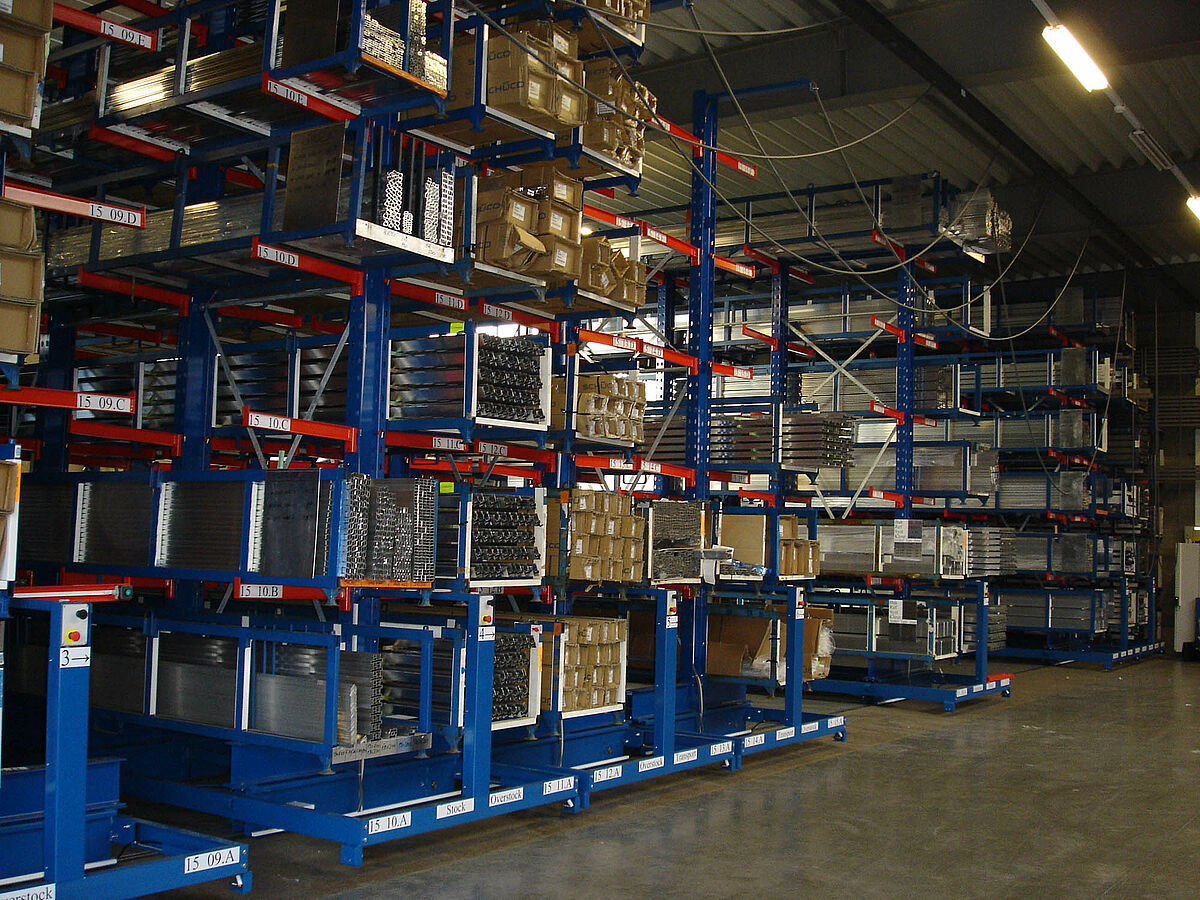
Racks reach up to the hall ceiling, narrow aisles leave barely any room to dodge, and in between, forklifts maneuver at speed through everyday operations: warehouses are high-risk workplaces. Every action, every movement counts—especially when concentration and clear procedures are lacking. Yet in the hectic day-to-day routine, safety often falls by the wayside. Major investments aren’t always necessary: targeted measures already deliver noticeably more protection.
Warehouse safety is a management responsibility
In 2023, the German Social Accident Insurance (DGUV) recorded around 783,000 notifiable workplace accidents. The transport and storage sector, which includes warehouse operations, was particularly affected: 22% of all fatal workplace accidents occurred here.
These figures make it clear that warehouse areas are among the most accident-prone work environments. Accidents cause human suffering and significant economic losses due to production downtime and rising insurance premiums.
In accordance with Section 3 of the Occupational Health and Safety Act (ArbSchG), employers are obliged to ensure and improve the safety and health of their employees at work through appropriate measures. These include, among other things, regular risk assessments, the implementation of protective measures, and employee instruction.
Proactive safety management in the warehouse is not only a legal obligation but also the foundation for effective warehouse safety regulations.
Which measures really work
Warehouse accidents rarely happen without warning. The same triggers often recur: unclear walkways, insufficiently trained employees, or missing safety markings. What matters is not the number of measures but their effectiveness in day-to-day operations. With the following warehouse safety measures, we present key levers you can use to improve safety in a targeted way.
Employee training
Correctly assessing hazardous situations, responding appropriately, and recognizing risks at an early stage—this is only possible with the right know-how. Regular training helps ensure that safety requirements are not only known but also applied naturally in everyday work. It makes potential hazards visible, strengthens awareness of responsibility, and promotes safe behavior.
Practice-oriented formats are particularly effective, such as training sessions held directly in the warehouse or short team safety checks. New employees should also be familiarized with the most important rules right away. When everyone knows what matters, the whole team acts more safely.
Safety starts with the racking system
Racks don’t just carry loads—they carry responsibility. In warehouses with high throughput, they must reliably withstand everyday contact with forklifts or pallet trucks. Systems equipped with well-designed impact protection and high-quality materials significantly reduce the risk of accidents.
OHRA relies on hot-rolled, solid-web steel profiles in manufacturing—a design that provides maximum stability even under heavy loads. Especially practical: the flexibly adjustable cantilever arms can be hooked in without tools and adapted at any time if needed. This also increases safety in day-to-day warehouse operations because the system can be easily aligned with changing requirements.
Personal protective equipment (PPE)
In the warehouse, a moment’s inattention can already lead to injury. That’s why personal protective equipment is mandatory in many situations. Depending on the task and risk level, different equipment is used: safety shoes with steel toe caps are standard in most areas, as are high-visibility vests in zones with limited visibility. When handling heavy components or hazardous substances, helmets, gloves, or hearing protection may also be required.
According to occupational health and safety law, companies are obliged to provide suitable PPE—and to ensure that employees wear it correctly. This includes not only the equipment itself but also clear instructions and regular briefings. Make sure your employees work with the right protective equipment. This protects their health and also your business from avoidable downtime.
Order and cleanliness
Loose packaging remnants on the floor, spilled liquids, or carelessly parked pallets—such small things are among the most common causes of slips, collisions, and accidents in the warehouse.
Regular tidying, clear responsibilities, and defined cleanliness standards help avoid risks—without any additional investment. Ensure traffic routes remain clear, tools are stored in defined locations, and contamination is removed promptly. With little effort, you create a significantly safer working environment.
Lighting and visibility
Good visibility is the basis for safe work. In poorly lit warehouse areas, the risk of accidents increases—for example due to overlooked obstacles, misjudged distances, or insufficient visibility of signage. Especially in areas with forklift traffic or on traffic routes, uniform, glare-free illumination is crucial.
Modern LED lighting systems offer several advantages: they are durable, energy-efficient, and can be combined with motion detectors or daylight sensors. This ensures light is always available exactly where your employees need it. Another benefit: you avoid unnecessary energy consumption. In addition, safety lights and emergency lighting help ensure a quick and safe response in an emergency.
Visible structures
Whether warning signs, floor markings, or clearly separated traffic routes—visual guidance is a key element of warehouse safety. Signage and colored lines help identify hazard zones, escape routes, or quiet areas at a glance. A consistent design in line with applicable standards (e.g., ASR A1.3) provides additional clarity and helps employees move safely through the warehouse.
Especially important: separating pedestrian walkways from vehicle zones. In areas where people and industrial trucks meet, the risk of accidents rises significantly. Physical barriers, separate routing, or clear floor markings noticeably reduce this risk. Regularly check whether the routing still fits your processes and adjust it if something changes.
Regularly review safety concepts
Protective equipment, clear markings, and stable racking systems form the foundation. But warehouse safety is not a fixed state; it’s an ongoing process. Only regular inspections and adjustments turn measures into a functioning overall concept.
A central tool here is the risk assessment. It helps identify risks systematically and derive appropriate protective measures. Particularly useful: using checklists for internal safety walkthroughs. This makes it possible to detect weaknesses before they become a problem.
External support also pays off: occupational safety specialists contribute valuable perspectives and up-to-date expertise. They support not only in assessing risks but also in training and selecting suitable measures. This keeps your safety concept compliant, practical, and effective.
Conclusion
Warehouse safety does not arise from ticking off a checklist. Instead, understand it as an attitude and an integral part of corporate culture. Your warehouse is not a static space, so processes, personnel, and requirements frequently change. That’s why the safety concept must be firmly anchored in everyone’s (protected) mindset.
Start exactly there: create an environment where alertness, responsibility, and continuous improvement are second nature. Involve your employees actively, encourage open feedback on potential hazards, and make improvement a routine. Safety pays off: through fewer outages, motivated teams, and smooth operations in everyday warehouse life.
