
Efficiency, precision, and cost savings—this is what automated warehousing promises. But alongside its many advantages, there are also drawbacks that companies must consider. In numerous industries, it has already become indispensable. What opportunities does the automation of your warehouse processes offer, and where are its limits? We examine the pros and cons of automated warehousing and show who can truly benefit from using these modern storage solutions.
What is automated warehousing?
Automated warehousing uses modern technologies to standardize processes, increase efficiency, and minimize errors. Software and hardware work together to make optimal use of storage space, shorten throughput times, and precisely control the flow of goods. At its core is the warehouse management software, which coordinates all movements of goods and manages capacity optimally.
Typical components of automated systems include storage and retrieval machines, driverless transport systems (AGVs), and picking solutions that handle tasks such as putaway, retrieval, and shipping. Depending on the level of automation, a distinction is made between semi-automated and fully automated warehouses. Semi-automated systems support manual work, while fully automated solutions handle all processes independently and are ready for operation around the clock.
Examples of automated warehouse solutions
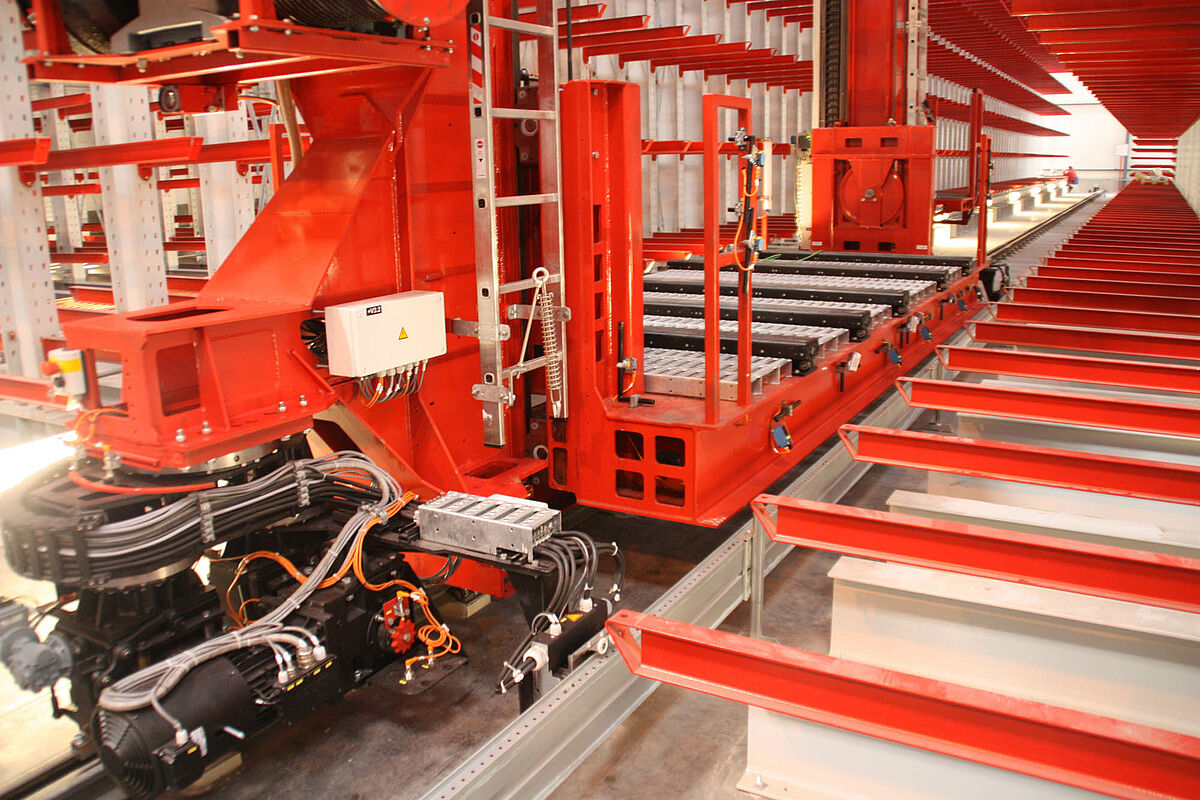
A typical example of an automated storage system is a high-bay warehouse, which maximizes the available storage area thanks to its vertical design. These are frequently used in industries such as metal processing or wholesale. Automated small-parts warehouses, on the other hand, are specifically designed for smaller products. They are often used in the electronics or consumer goods industries. Modular container systems and precise shuttles ensure rapid and error-free order picking.
Another innovative solution is driverless transport systems. These autonomous vehicles transport goods within the warehouse or between warehouse and production areas. They navigate using sensors or maps and ensure safe operation, even in dynamic environments.
Automated warehousing: Advantages
The automation of warehouse processes offers numerous benefits that go far beyond pure time and cost savings. By deploying modern technologies, warehouses can be operated more efficiently, workflows optimized, and employee safety increased. These advantages make automated warehouse solutions particularly attractive for companies that value precision, scalability, and sustainability.
Increase efficiency
Automated systems enable much faster handling of warehouse processes compared to manual work. Storage and retrieval machines and driverless transport systems store and retrieve goods precisely and within a very short time.
Companies with high inventory turnover increase their process speed and make optimal use of limited storage space with automated warehousing.
Save costs
Automated warehousing permanently reduces operating costs. Machines take over manual tasks, meaning the company requires fewer personnel. At the same time, the systems reduce errors in picking and inventory management. This advantage prevents costs due to shortages or returns.
Improve safety
Automated storage systems improve safety in operations because machines take on high-risk tasks. This significantly reduces the risk of accidents for warehouse employees. Driverless transport systems and automated storage and retrieval equipment prevent direct contact between staff and moving loads. Work at great heights or in extreme temperatures can also be carried out safely with automated systems. In addition, sensors and safety mechanisms detect potential hazards at an early stage and automatically stop operations when necessary. Automation therefore protects employees from acute injuries and relieves them of monotonous or physically demanding tasks.
Scale
Automated warehouse solutions grow with a company’s requirements. When operations expand, new products are added, or seasonal peaks occur, the systems can be easily extended. Companies can add shuttles, conveyors, or racks without interrupting existing processes. This flexibility makes automated systems a future-proof solution.
Act sustainably
Automated warehouse solutions promote sustainability through more efficient processes. Intelligent systems switch lighting and machines on only when they are actually needed. This saves energy and reduces operating costs. Precise inventory management prevents overproduction and reduces unnecessary transport. As a result, CO₂ emissions also decrease.
Automated warehousing: Disadvantages
Despite its numerous advantages, automation also brings challenges. Companies should weigh these carefully before investing in the relevant systems.
High initial investments
Automated warehouse solutions come with high acquisition costs. Companies invest in technology, planning, and installation. Systems are often designed for peak utilization to handle seasonal or unexpected spikes. Even in times of low order volumes, fixed costs remain. In addition, ongoing expenses arise for maintenance, repairs, and energy. These burdens particularly affect small and medium-sized enterprises.
Technical dependency
With automated systems, companies often become dependent on suppliers. The technology frequently comes from different providers, making maintenance and coordination more difficult. Spare parts, extensions, or optimizations are usually obtained only from the original supplier. This leads to higher costs and less room for negotiation.
Limited flexibility
Automated warehouse solutions are less flexible than manual systems. Once installed, they determine in the long term how processes and space are used. Changes—for example, new products or altered order structures—can only be implemented with considerable effort and high costs. Companies that need to adapt quickly may lose agility as a result.
Changing world of work
Automation fundamentally changes work in the warehouse. Traditional manual activities disappear. On the other hand, the demand for specialists in maintenance and control increases. Employees must be trained or retrained. This change requires time and financial resources.
Who benefits from automated warehousing?
Automated warehousing has advantages and disadvantages for companies. Each company weighs up whether it is worthwhile to adapt its logistics structure. Overall, it is suitable for operations that want to make their processes more efficient and reduce costs in the long term. It is particularly useful where large volumes of goods are moved, short delivery times are required, or special storage conditions are needed. Industries such as logistics, retail, and manufacturing benefit the most, as they must handle high turnover and complex warehouse processes.
Industry examples:
- Mechanical engineering and metal processing: In industries where heavy and bulky components are stored, automated high-bay systems save space and facilitate access. They also ensure rapid material supply along production lines.
- Wood processing and timber trade: Furniture manufacturers and timber traders benefit from the precise and safe storage of long or heavy wood parts. Automated systems enable fast access and optimal use of storage space.
- Building materials industry: The storage of bulky and heavy materials such as precast concrete elements, steel, or bricks becomes more efficient with automated systems. They optimize material flow and minimize manual handling.
- Aluminum and plastics processing: Companies that store large quantities of raw materials or semi-finished parts benefit from automated solutions that precisely control the storage and transport of these sensitive materials.
Key factors for the decision:
Not every warehouse automation project pays off equally. The decisive factors are the company’s specific requirements.
- Warehouse size and movements: Large warehouses with high goods turnover benefit the most from automated processes.
- Budget: The high initial investments must be amortized through long-term savings.
- Need for scalability: Companies with growth plans or seasonal peaks need systems that can be expanded flexibly.
Conclusion
Automated warehousing offers companies enormous advantages: it increases efficiency, reduces costs in the long term, and enhances safety in the warehouse. Industries that manage large or heavy goods in particular benefit from precise control and the optimal use of storage space. At the same time, automation enables a future-proof and scalable solution for growing requirements.
However, it also brings challenges. High investment costs, technical dependencies, and the need for skilled personnel require careful planning and preparation. Not every warehouse is equally suitable for full automation. Companies must carefully weigh the advantages and disadvantages of automated warehousing to make an informed decision.
Would you like to implement an automated storage system? We’re happy to support you from planning through to operation.
Get in touch
